
KTXHK INSIGHTS
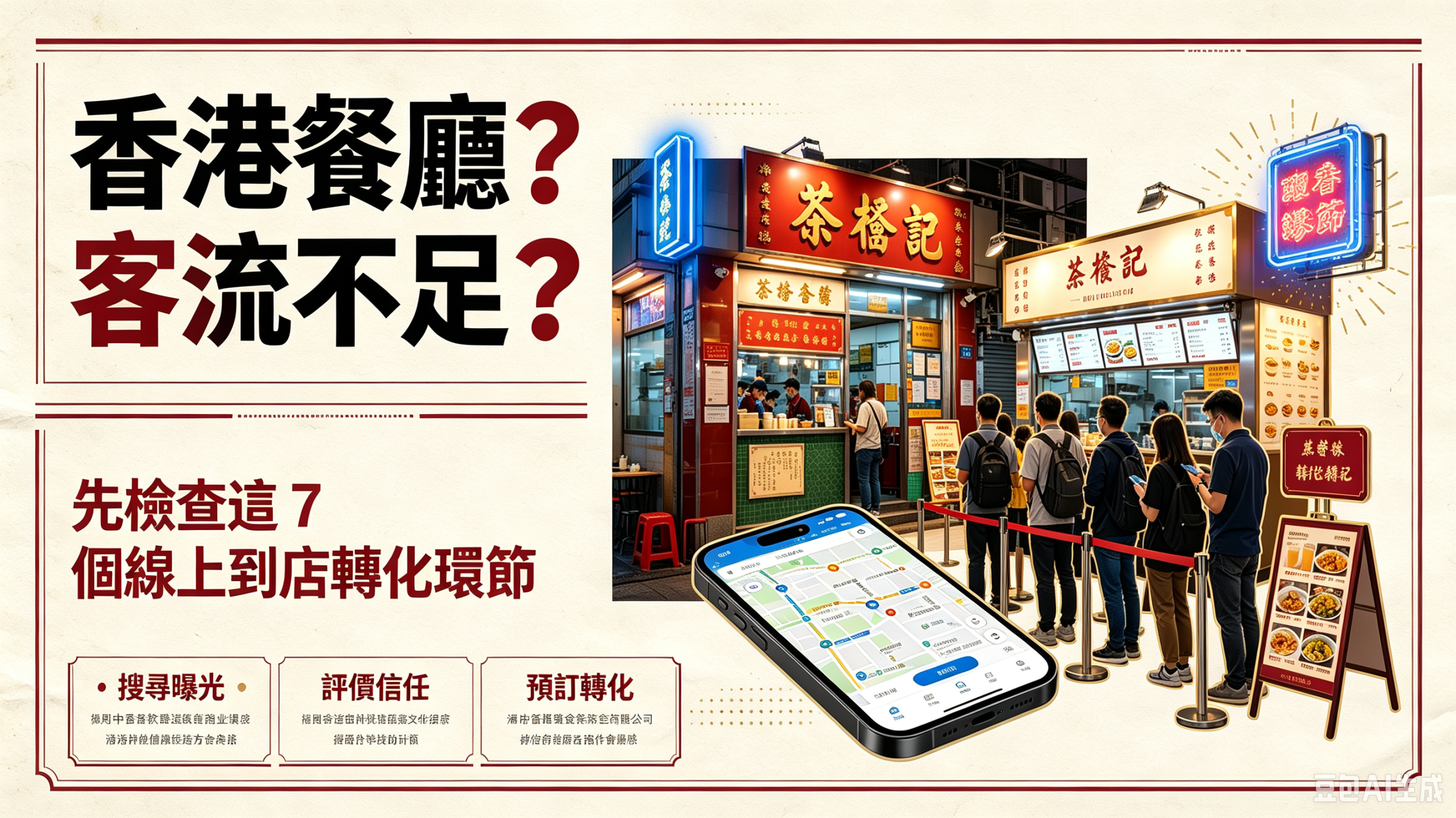
Is Your Hong Kong Restaurant Short of Foot Traffic? Check These 7 Online-to-Visi
If your restaurant is experiencing low foot traffic in Hong Kong, the problem may not simply be a lack of advertising or promotions. Many potential diners may have already found your restaurant online—but leave without booking…
Is Your Hong Kong Restaurant Short of Foot Traffic? Check These 7 Online-to-Visit Conversion Points
If your restaurant is experiencing low foot traffic in Hong Kong, the problem may not simply be a lack of advertising or promotions. Many potential diners may have already found your restaurant online—but leave without booking or visiting because your information is incomplete, your photos are unconvincing, your prices are unclear, or getting there feels inconvenient.
The goal is not only to get more people to see your restaurant. It is to create a smooth journey from online discovery to an in-person visit.
Below are seven essential online-to-visit conversion points every Hong Kong restaurant should review.
Search visibility: Can diners find you?
Most diners do not start by walking around a district and comparing restaurants. They search online first, using terms such as:
“Tsim Sha Tsui birthday restaurant”
“Causeway Bay Japanese food”
“Central business lunch”
“Tung Chung family restaurant”
“Hong Kong hotpot recommendations”
“Breakfast near me”
“Dinner in [district name]”
If your restaurant does not appear on Google Search, Google Maps, OpenRice, social media, or relevant food platforms, potential customers may never have the chance to consider you.
Check the following
Has your Google Business Profile been claimed and completed?
Are your restaurant name, address, phone number and opening hours accurate?
Have you selected the right business categories, such as Italian restaurant, café, yakiniku restaurant or bar?
Does your profile include relevant district, cuisine and dining-intent keywords?
Is your information consistent across Google Maps, OpenRice, Tripadvisor, Facebook and Instagram?
Can people find you when they search your restaurant name, cuisine type or location?
For example, a Mong Kok restaurant specialising in handmade pasta may only list its brand name online, without mentioning “Mong Kok Italian restaurant,” “handmade pasta,” or “dinner set.” When people search for Italian food in Mong Kok, search engines and listing platforms may not clearly understand that the restaurant is relevant.
One of the most effective ways to increase restaurant foot traffic is to make sure diners can find you at the exact moment they are looking for your type of food.
Restaurant information: Remove uncertainty
Once diners find your restaurant, they usually decide within seconds whether to continue exploring. At this stage, they are asking practical questions:
Where exactly is it?
Is it open today?
What time does the kitchen close?
Can I call or message the restaurant?
Can I make a reservation?
What payment methods are accepted?
Is it suitable for a family meal, date, business lunch or group gathering?
Are there minimum-spend rules, service charges or reservation conditions?
If any of this information is unclear, many diners will simply move on to another restaurant.
Essential details to display
Restaurant name in English and Chinese
Full address, including mall name, floor and unit number
Accurate opening hours, including lunch, dinner, afternoon tea and break times
Phone number, WhatsApp contact, reservation link and social-media contact options
Cuisine type and signature dishes
Average spend per person
Payment options, including credit cards and digital wallets
Service charge, corkage, cake-cutting fee and minimum-spend policies
Wi-Fi, power sockets, baby chairs, pet-friendly arrangements, private rooms or venue hire
Suitability for business meals, birthdays, groups and family dining
Consistency matters. If Google says you close at 10:00 pm but the kitchen stops taking orders at 9:00 pm, or if Facebook says you are closed on Mondays while Instagram says you open daily, customers may lose trust before they even visit.
Photos: Diners eat with their eyes first
Restaurant photography is not just decoration—it is a sales tool. Before diners taste the food, experience the service or enter the space, they use your photos to judge whether your restaurant is worth visiting.
Dark mobile photos, heavy filters, cluttered food presentation or unclear images can make even a good restaurant look less appealing. Clear, appetising and realistic images can significantly improve booking and walk-in intent.
Photos your website and listings should include
Five to ten high-quality images of signature dishes
Lunch, dinner, dessert, drinks and set-menu photos
A clear photo of the restaurant entrance
Interior seating, lighting, décor and atmosphere
Private rooms, outdoor seating, bar areas or other distinctive spaces
Photo-friendly or social-media-friendly corners
Group dining, birthday celebrations or business-lunch settings
Current seasonal dishes and festive menus
Key photo principles
Use your strongest signature dish as the cover image.
Show both food and the dining environment.
Use real dishes that accurately reflect what diners will receive.
Update photos regularly when menu items change.
Keep visual style consistent to build a more professional brand image.
If your restaurant positions itself as a premium dinner venue but only has dim, casual phone photos online, diners may struggle to understand why the experience is worth the price.
Pricing: Clear prices reduce hesitation
Price is one of the most important decision factors for Hong Kong diners. People are not necessarily looking for the cheapest option, but they want to know roughly what they will spend before committing to a booking.
This is especially important for families, friends planning a gathering, corporate diners and couples choosing a venue for a date.
Make the following clear
Average spend per person, such as “Lunch: HK$100–180” or “Dinner: HK$250–400”
Lunch sets, dinner sets, afternoon tea and happy-hour pricing
Prices or price ranges for signature dishes
Whether a 10% service charge applies
Minimum spend, festive surcharges or deposit requirements
What is included in a set menu
Children’s menus, vegetarian choices, non-alcoholic drinks or sharing menus
Delivery, takeaway, self-pickup or membership offers
Unclear pricing creates perceived risk. A diner may assume the restaurant is expensive, worry about exceeding the group’s budget, or feel uncertain about whether a set menu offers good value. In many cases, they will choose another restaurant with clearer information.
You do not need to place every menu item on the homepage. A simple line can already reduce friction:
Lunch sets from HK$98 | Average dinner spend: HK$280–350 | 10% service charge applies
Reviews: Diners trust other diners
For first-time customers, reviews often influence the final decision. Diners may check Google ratings, OpenRice reviews, social-media comments, short-form videos and friends’ food photos before deciding where to go.
Reviews are more than a star rating. They help people evaluate food quality, service consistency, portion size, waiting time, value for money and whether the actual experience matches what is shown online.
Monitor regularly
Average ratings on Google, OpenRice and other key platforms
Reviews posted in the last one to three months
Dishes, service points or experiences customers praise most often
Repeated complaints, such as long waits, slow service, rude staff or unclear charges
Older negative reviews that relate to issues you have already improved
Whether your restaurant replies to customer feedback
How to reply to negative reviews
A professional response should:
Acknowledge the customer’s poor experience.
Apologise for the specific issue.
Briefly explain what has been or will be improved.
Offer a suitable follow-up contact channel.
Avoid arguing, blaming or using generic replies.
For example:
We are sorry that your dining experience did not meet expectations. We have reviewed the longer waiting time you mentioned with our kitchen and front-of-house teams, particularly for peak hours. Thank you for sharing your feedback. If you are comfortable doing so, please contact us on WhatsApp so we can understand more about your visit and follow up properly.
You may not win back every unhappy guest, but a thoughtful response reassures future diners that your restaurant takes service seriously.
Reservations: Make booking effortless
Many restaurants lose potential customers at the final stage—not because the food looks unappealing, but because making a reservation is inconvenient.
A diner may be ready to book, but cannot find a phone number, receives no WhatsApp response, waits too long for an Instagram reply, or faces a lengthy booking form. In a competitive dining market, that diner can easily choose another restaurant within minutes.
Include clear calls to action
Book a table
WhatsApp us
Call now
View menu
Enquire about private events
Book a birthday or group dinner
Check today’s availability
Your website, Google Business Profile, Instagram bio, Facebook page and food-platform listings should all offer clear and consistent booking options.
Your reservation process should be
Easy to use on mobile
Short and simple
Clear about available time slots
Able to provide booking confirmation
Supported by timely WhatsApp or direct-message replies
Transparent about deposits, cancellations and late-arrival policies
Structured for larger groups, private bookings and special requests
The fewer steps between “I want to go” and “My table is confirmed,” the more likely you are to convert interest into actual restaurant foot traffic.
Transport information: Make the journey feel easy
Hong Kong diners value convenience. This is particularly important for first-time visitors, families with children, elderly diners, business guests, rainy-day customers and people meeting after work.
A street address alone is often not enough. Customers want to know which MTR exit to use, how many minutes they need to walk, whether parking is available and whether the entrance is easy to find.
Include practical directions
Nearest MTR station and recommended exit
Walking time from the MTR station
Mall name, floor, unit number and nearby landmarks
Bus, minibus or ferry access where relevant
Parking locations and valet or parking arrangements
Taxi drop-off point
Step-free access, lifts and stroller accessibility
Google Maps navigation link
Easy directions for rainy days or evening visits
Website example
Address: Shop 302, 3/F, XX Mall, XX Road, Tsim Sha Tsui, Kowloon MTR: 5-minute walk from Tsim Sha Tsui Station Exit A1 Driving: Parking is available at the mall; vehicle entrance via XX Road Reservations: WhatsApp +852 XXXX XXXX
These details reduce the practical friction that can stop a customer from turning intention into a visit.
More traffic is not always the answer
When restaurant foot traffic is low, the first reaction is often to spend more on advertising, offer bigger discounts or reduce prices. However, if your online listings are incomplete, your images are weak, your menu pricing is unclear, your reviews are unmanaged or your booking process is difficult, additional marketing spend may simply bring more visitors to a page that does not convert.
A stronger approach is to first improve every stage of the online-to-visit journey.
| Conversion point | What diners are thinking | What your restaurant should do | |---|---|---| | Search visibility | “What restaurants are available nearby?” | Optimise Google, Maps, food platforms and location-based keywords | | Restaurant information | “Where is it, when is it open and is it suitable for me?” | Keep addresses, hours, contacts and key details complete and consistent | | Photos | “Does the food and space look appealing?” | Use high-quality, current and realistic food and venue images | | Pricing | “Will this fit my budget?” | Display average spend, set-menu prices and extra charges clearly | | Reviews | “What do other diners think?” | Monitor reviews and respond professionally to feedback | | Reservations | “How can I book right now?” | Offer clear, fast and mobile-friendly booking options | | Transport | “Will it be difficult to get there?” | Provide MTR exits, walking times, parking and navigation details |
*
Turn online attention into real visits
The most effective way to solve low restaurant foot traffic is not simply to chase likes, views or reach. The key question is whether people who discover your restaurant online can quickly understand what you offer, trust the experience, know the expected spend, book easily and find their way to your door.
Before increasing your ad budget, audit these seven conversion points. You may find that diners are already discovering your restaurant—but the final steps toward booking and visiting are not yet easy enough.
By improving your online information, visual content, price transparency, review management, reservation process and transport guidance, you can turn more searches, profile visits and social-media views into reservations, walk-ins and repeat customers.