
KTXHK INSIGHTS
How Should Restaurants Respond to Negative Dianping Reviews?
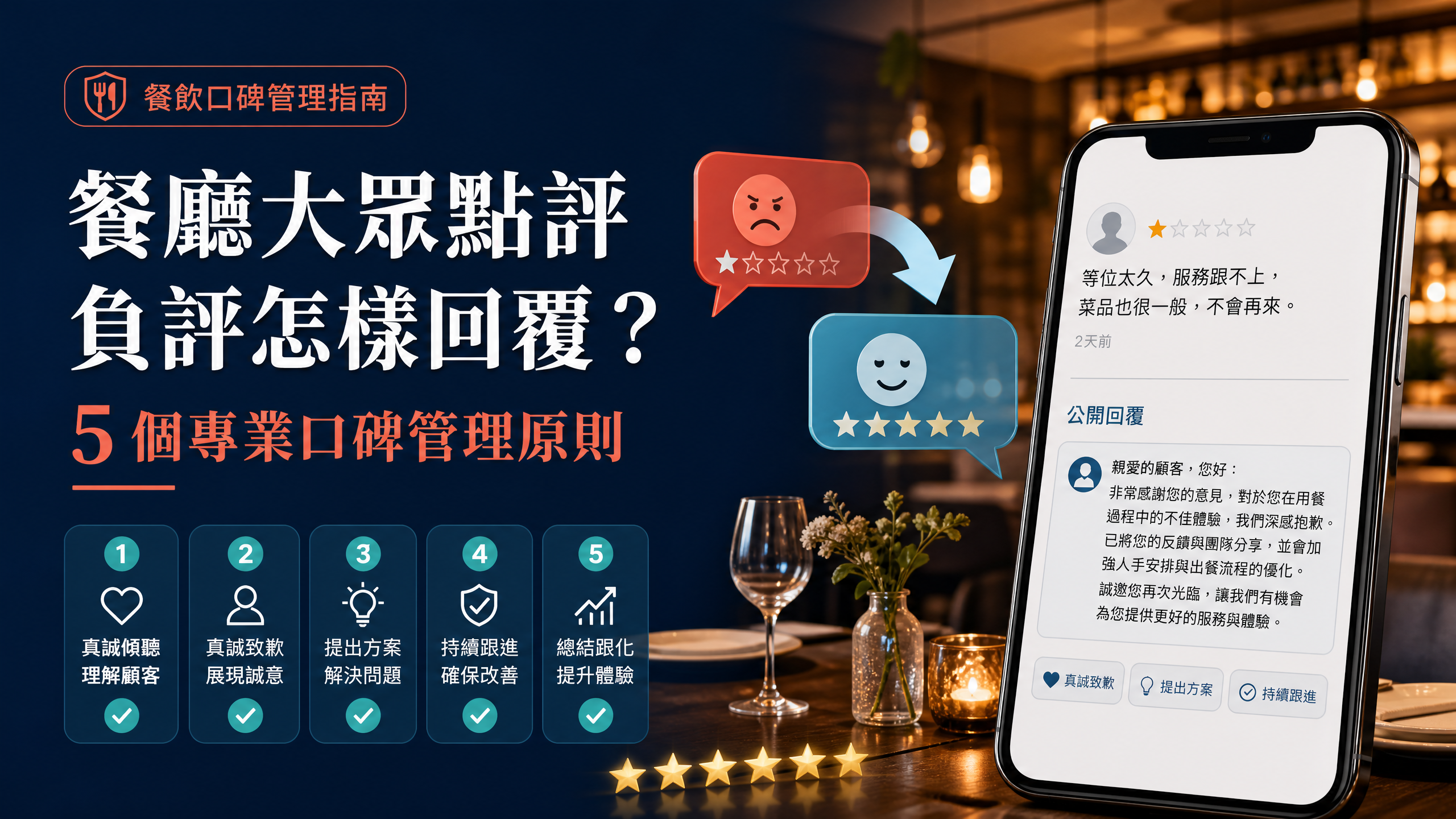
5 Professional Reputation Management Principles
How Should Restaurants Respond to Negative Dianping Reviews? 5 Professional Reputation Management Principles
A negative review on Dianping can feel frustrating, especially when the restaurant believes the feedback is unfair or incomplete. However, the most important goal is not to win an argument with the reviewer—it is to show the reviewer and future diners that your restaurant listens, takes concerns seriously and is willing to improve.
A well-handled response may not always change a customer’s rating, but it can reduce the impact of negative feedback, rebuild trust and reveal operational issues that need attention. Effective review management focuses on timely replies, a professional tone, personalised responses and meaningful follow-up actions.
1. Stay Calm and Verify the Facts First
Never reply to a negative review while feeling angry or defensive. A public response can remain visible for a long time and may influence many future customers who are deciding whether to visit your restaurant.
Before replying, review the facts internally.
Check these details first
- The customer’s visit date, dining time, party size or booking record
- Waiting-list, reservation and seating records
- Order details, serving times and payment records
- Feedback from the manager, front-of-house staff and kitchen team
- Whether other guests reported the same issue on that day
- Whether the complaint involves food quality, service, hygiene, pricing, reservations or payment
- Whether the review appears irrelevant, abusive, fraudulent or unrelated to a genuine dining experience
It is useful to have one designated manager prepare the response and another team member review the tone before posting. This reduces the risk of emotional or overly defensive language. Guidance on restaurant-review management consistently recommends separating emotion from the response process and checking facts before replying.
2. Acknowledge the Guest’s Experience Before Explaining
The first sentence should not be “That is not what happened,” “We were very busy,” or “You misunderstood our policy.” Even if the restaurant does not agree with every detail, it should first acknowledge that the customer had an unsatisfactory experience.
This does not mean admitting to every allegation. It means recognising the customer’s feelings and showing that you take the matter seriously.
Recommended response sequence
- Thank the guest for sharing feedback.
- Apologise for the disappointing experience.
- Refer to the specific issue they raised.
- Give a short, factual explanation only where necessary.
- Explain what you are reviewing or improving.
- Invite the guest to continue the conversation privately.
Less effective response
We were very busy that day, and all customers had to wait. You should not leave a bad review simply because you waited longer than expected.
This sounds defensive and may make other readers feel that the restaurant is dismissing customer concerns.
Better response
We are sorry that the waiting time during our peak period affected your dining plans. We have reviewed our queue-management and guest-communication process, and we will strengthen staffing and waiting-time updates during busy hours.
A professional response acknowledges the experience first, avoids hostile language and addresses the customer’s actual concern.
3. Be Specific, Not Generic
A reply such as “Thank you for your valuable feedback. We will continue to improve” may be polite, but it often sounds automated if it is used repeatedly.
Dianping users can quickly recognise copy-and-paste responses. You may use internal templates to save time, but each public reply should include details that show you have actually read and investigated the review.
Issues you can address specifically
- Long waiting times for seating
- Slow food service or missed orders
- Food temperature, flavour, portion size or presentation
- Staff attitude or communication problems
- Unclear pricing, service charge, tea charge or set-menu inclusions
- Reservation errors or unavailable tables
- Cleanliness, seating comfort, washroom conditions or restaurant atmosphere
- Delivery mistakes, missing items or poor packaging
A practical response formula
Thank the guest + apologise for the specific issue + explain that you have reviewed it + describe an improvement action + invite private follow-up.
Example: Slow service and food quality
Thank you for visiting and for sharing your feedback. We are sorry that the serving time and the quality of the [dish name] did not meet your expectations. We have shared your comments with both our kitchen and front-of-house teams and are reviewing our peak-hour serving process and food-quality checks. If you are willing, please send us a private message with your visit date and order details so that we can investigate further and follow up properly.
Personalised replies that reference specific concerns are more credible than generic wording and signal that a restaurant is genuinely handling the case.
4. Respond Publicly, Resolve Privately
Your public response should demonstrate accountability and professionalism. It should not become a public debate about who is right or wrong.
If the matter involves refunds, compensation, booking details, payment records, staff names, personal information or a factual dispute, move the detailed discussion to a private channel such as Dianping direct message, phone, WhatsApp, WeChat or email.
A public reply should include
- A brief acknowledgement and apology
- Confirmation that the issue is being reviewed
- A practical improvement or next step
- A clear invitation to contact the restaurant privately
Avoid publishing
- Customer names, phone numbers, booking details or payment information
- CCTV details, receipts or any personally identifiable information
- Personal criticism of the customer, staff or third parties
- Long point-by-point arguments
- Unverified claims or blame
- Statements such as “We will only help if you delete the review”
Moving detailed resolution into a private conversation is not avoiding responsibility. It protects privacy, allows the restaurant to collect accurate information and prevents an unproductive public argument. Review-management guidance also advises businesses to avoid personal attacks and protect customer privacy when handling complaints.[oddle][help.bethel.com]
5. Turn Negative Reviews into Operational Data
The most effective reputation management is not simply replying to reviews one by one. It is identifying repeated issues and fixing the underlying operational problems.
If guests repeatedly mention slow service, unclear charges, poor staff communication, long waiting times or inconsistent food quality, the bigger issue is not the response wording—it is the restaurant process.
Create a simple negative-review tracking sheet
| Category | What to record |
|---|---|
| Review date | Date posted and actual visit date, if available |
| Platform | Dianping, Google, OpenRice, Xiaohongshu or social media |
| Issue type | Food, service, speed, hygiene, pricing, reservations, environment or delivery |
| Specific complaint | Dish name, time period, table area or customer concern |
| Severity | Minor, urgent or serious escalation |
| Responsible team | Front of house, kitchen, reservations, delivery, store manager |
| Reply status | Replied, pending verification or escalated |
| Response timing | Whether the public reply was posted within 24–48 hours |
| Follow-up outcome | Contacted, unable to contact, resolved, compensation offered or no response |
| Improvement action | Training, staffing adjustment, menu clarification or workflow change |
| Review date | Check after one to two weeks whether similar complaints have decreased |
Reviewing Dianping, Google, OpenRice, Xiaohongshu and social-media comments daily—or at minimum weekly—helps restaurants spot patterns before they become a larger reputation problem. Timely, respectful and action-oriented responses are widely recommended as part of effective restaurant review management.
Response Templates for Common Dianping Complaints
Use the following templates as starting points. Do not copy them word for word every time. Add the real visit date, dish, service issue or booking situation whenever possible.
Long waiting time
Thank you for choosing our restaurant and for sharing your feedback. We are sorry that the waiting time during your visit was longer than expected and affected your dining experience. We have reviewed our queue-management and seating process and will improve staffing and waiting-time communication during busy periods. If you are willing, please send us a private message with your visit date and party size so that we can investigate further.
Slow service or missing items
Thank you for your feedback. We sincerely apologise that the serving time and the issue with [dish name / missing item] affected your meal. We have shared this with our kitchen and front-of-house teams and are reviewing the order, kitchen and serving process to prevent a repeat. Please send us a private message with your visit date and order details if you are comfortable doing so, and we will follow up properly.
Food-quality or taste complaint
Thank you for taking the time to share your experience. We are sorry that the taste, temperature or quality of [dish name] did not meet our usual standards or your expectations. Your feedback has been passed to our kitchen team, and we are reviewing our preparation and final quality-check procedures. We would appreciate the opportunity to learn more—please contact us by private message with your visit details.
Poor service attitude
We are sorry that you felt the service during your visit was not attentive or welcoming enough. Regardless of how busy the restaurant was, we should communicate with every guest politely, clearly and proactively. We have shared your comments with the store manager and will reinforce service training with our front-of-house team. Please send us a private message with your visit time and seating area if possible, so that we can investigate accurately.
Unclear charges or poor value
Thank you for raising your concerns about pricing and charges. We are sorry that the [service charge / tea charge / set-menu inclusions / additional fee] was not explained clearly before ordering. We are reviewing our menu wording, ordering process and staff communication to make all charges more transparent. If you are comfortable sharing your visit date and payment details privately, we would like to look into the matter carefully.
Potentially inaccurate or malicious review
We take every guest’s experience seriously and have reviewed the situation described in your feedback. At present, we have not been able to identify a matching booking or order record based on the information provided. We would appreciate it if you could contact us through Dianping private message with your visit date, party size or order details, so that our manager can verify the matter and respond appropriately. Thank you for your assistance.
This wording avoids directly accusing a reviewer of dishonesty while preserving the restaurant’s ability to investigate and, where justified, report content through the platform’s review process.
Timing and Escalation
Aim to post a public response within 24 to 48 hours after the review appears. This is fast enough to show that the restaurant cares, while allowing time to verify facts and prepare a calm response.
Escalate the matter immediately to a manager, owner or designated crisis-response contact when a review alleges:
- Food safety, contamination, allergy incidents or serious hygiene concerns
- Discrimination, harassment, threats or physical confrontation
- Fraud, payment disputes or refund disputes
- Serious staff misconduct
- A viral social-media complaint or media enquiry
- Legal threats or claims of personal injury
In these cases, avoid making broad admissions or public promises before the facts are confirmed. Acknowledge the concern, state that the matter is being urgently investigated and move the discussion to an appropriate private channel.
Key Takeaway
A strong Dianping response does not need to be long. It needs to be calm, specific, respectful and actionable.
Future diners will judge not only the negative review, but also how your restaurant handles it. When you respond quickly, acknowledge concerns, protect customer privacy and use feedback to improve operations, negative reviews become more than a reputation risk—they become a practical source of insight for better service, stronger trust and more repeat business.